You will fall asleep and dream of the flowers' song
Solo Exhibition at the Royal Artillery Factory, Seville, May 5 - September 20, 2026
Project funded by the Seville City Council, Department of Tourism and Culture
Through a contemporary reworking of Odysseus’s encounter with the Lotus-Eaters in Homer’s Odyssey, the exhibition asks what remains once movement, memory, and experience have transformed us. It approaches Odysseus as a figure shaped by displacement and change. Altered by every island and encounter, his body becomes a site of accumulation—an identity continually rewritten by the journey.
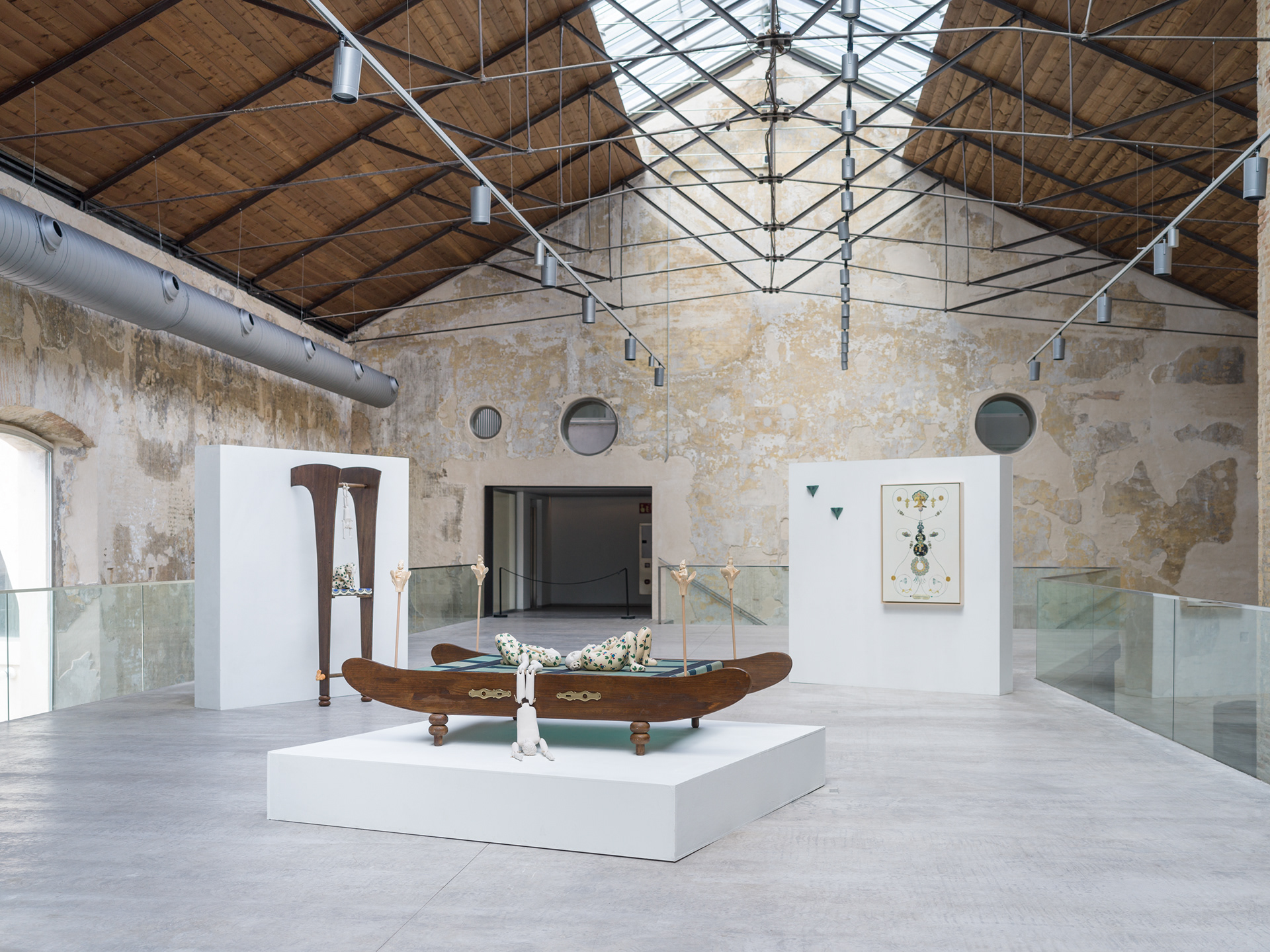
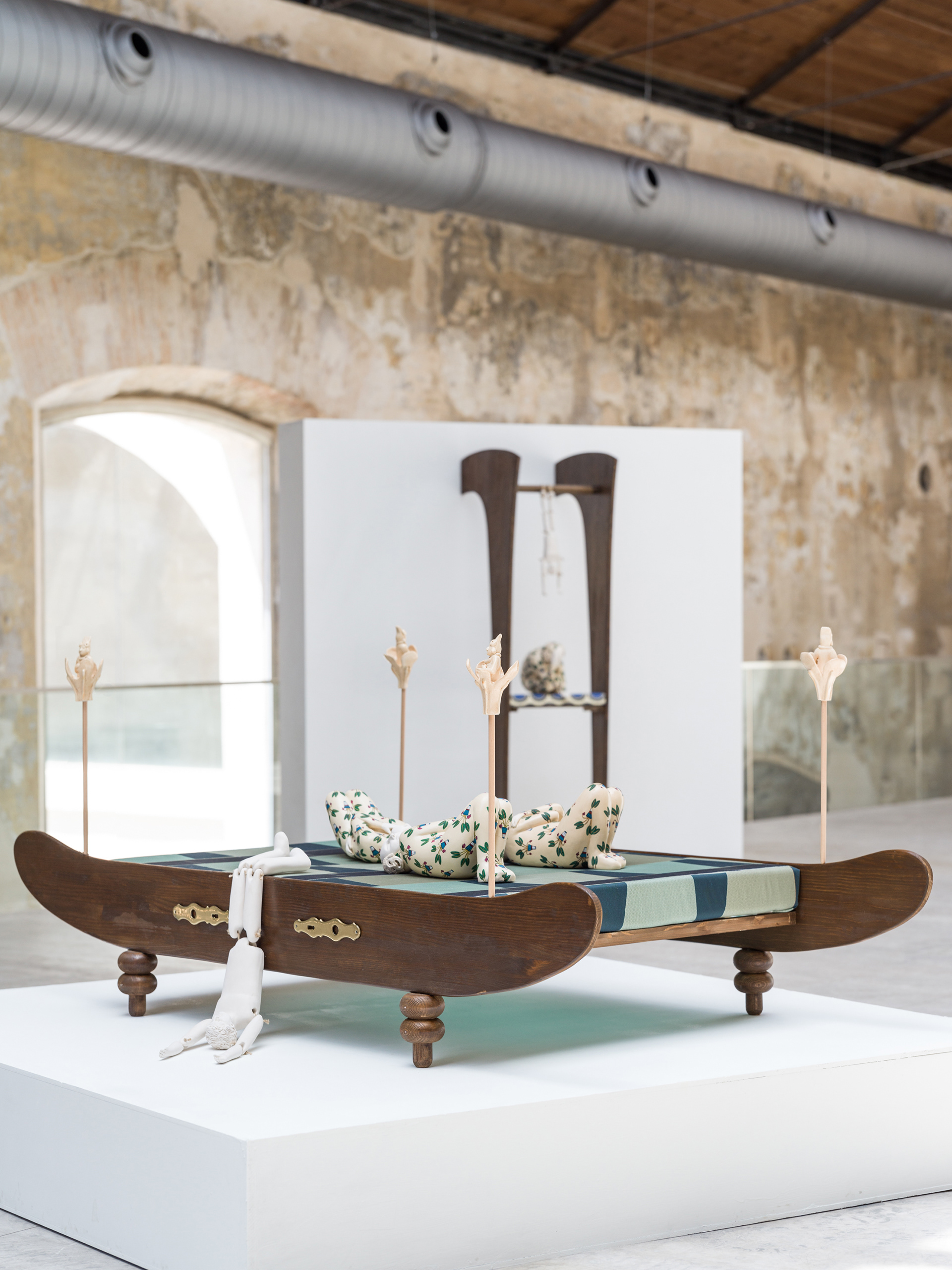
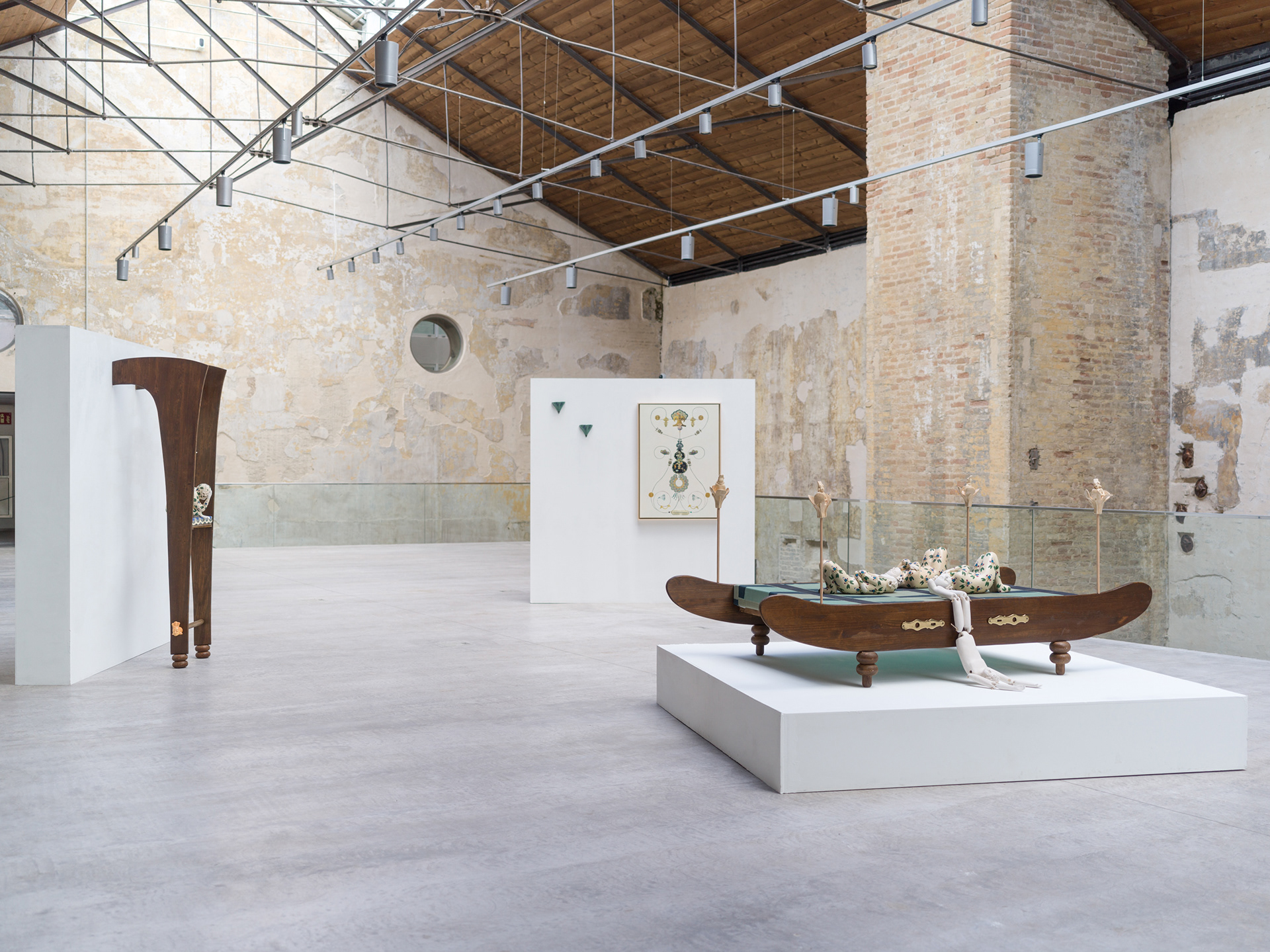
In He Created the Flowers to Have Worshippers (2026), the familiar geography of the Odyssey becomes unstable. The installation imagines the possibility that Odysseus’s journey may have crossed territories never registered by the canonical narrative: seas beyond the Western map and symbolic landscapes excluded by the Eurocentric construction of the myth. Greek and Roman references coexist with elements drawn from Maya visual cultures, creating a geography in which multiple cultural and temporal systems occupy the same narrative plane.
Within this landscape, Odysseus appears as a fragmented Roman ceramic doll, displaced from the centre of his own story. As he falls from the bed-like vessel that structures the installation, the gesture can also be understood as the collapse of a centralised narrative unable to contain cultural multiplicity: the hero has lost control over the linearity of his own epic.
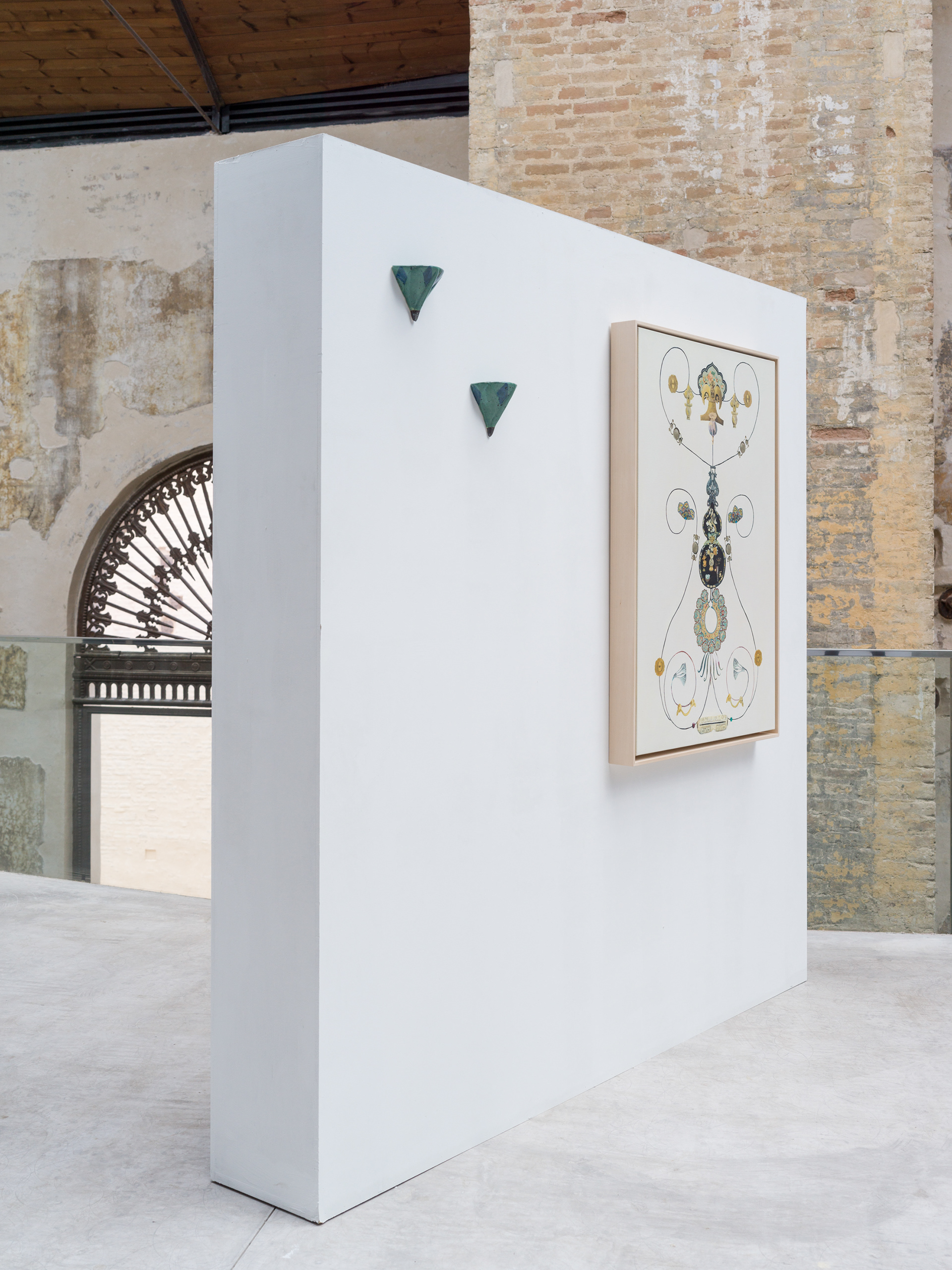
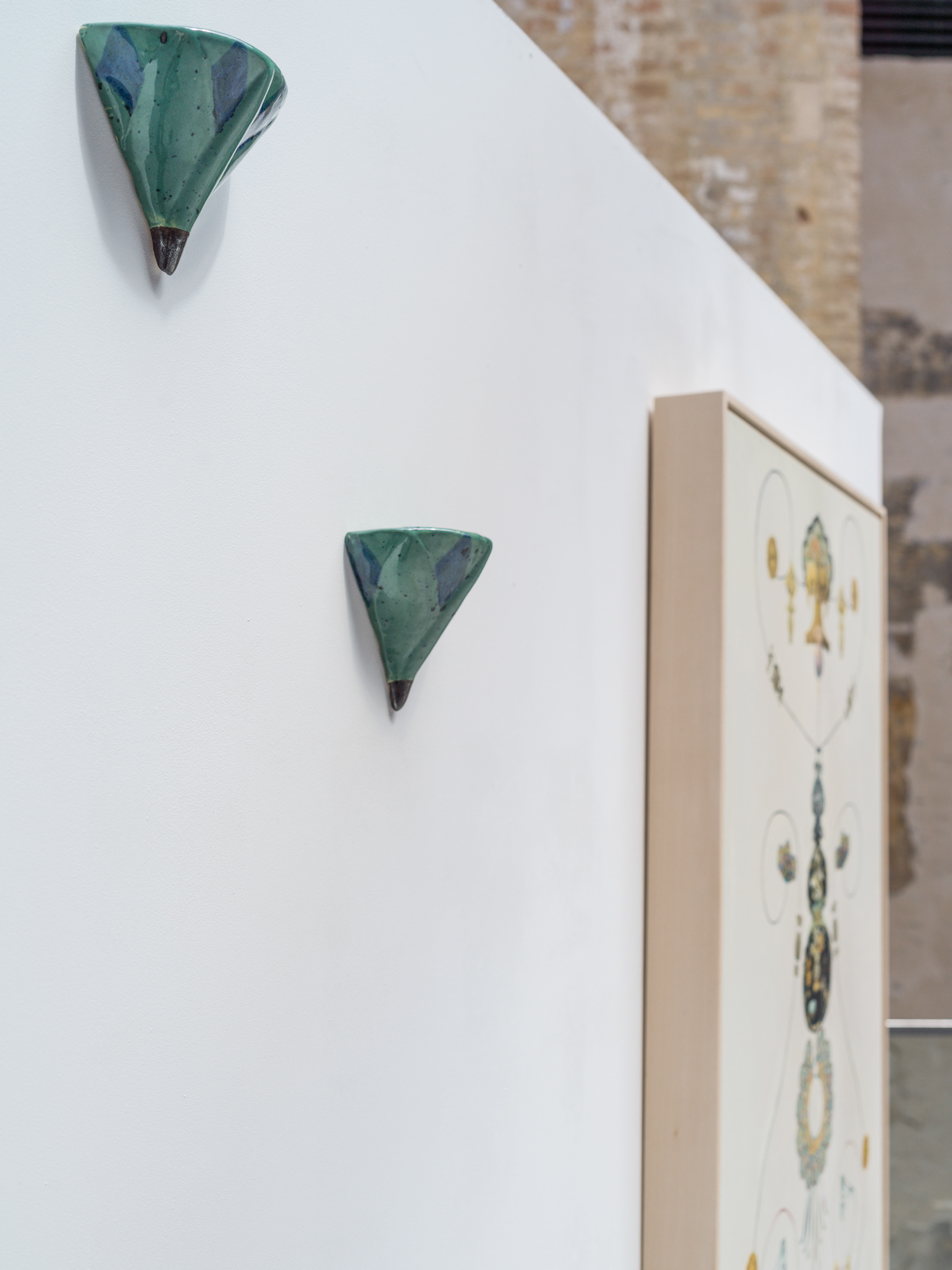
This understanding of identity also appears in the painting Hold the Serpent (2026), where its lines can be read simultaneously as routes of a journey and as the submerged stems of an aquatic plant. Like the lotus, whose hidden structures sustain what becomes visible above the surface, these connections suggest an identity held together by fragments. References to the spiritual and cosmological significance of the flower across different traditions blend to generate a hybrid constellation.
In Algaba’s scenographic environments, the past becomes a material open to transformation. Through their restrained and often silent atmosphere, these spaces invite viewers to inhabit that instability and reconsider the narratives through which identity, history, and belonging are constructed.
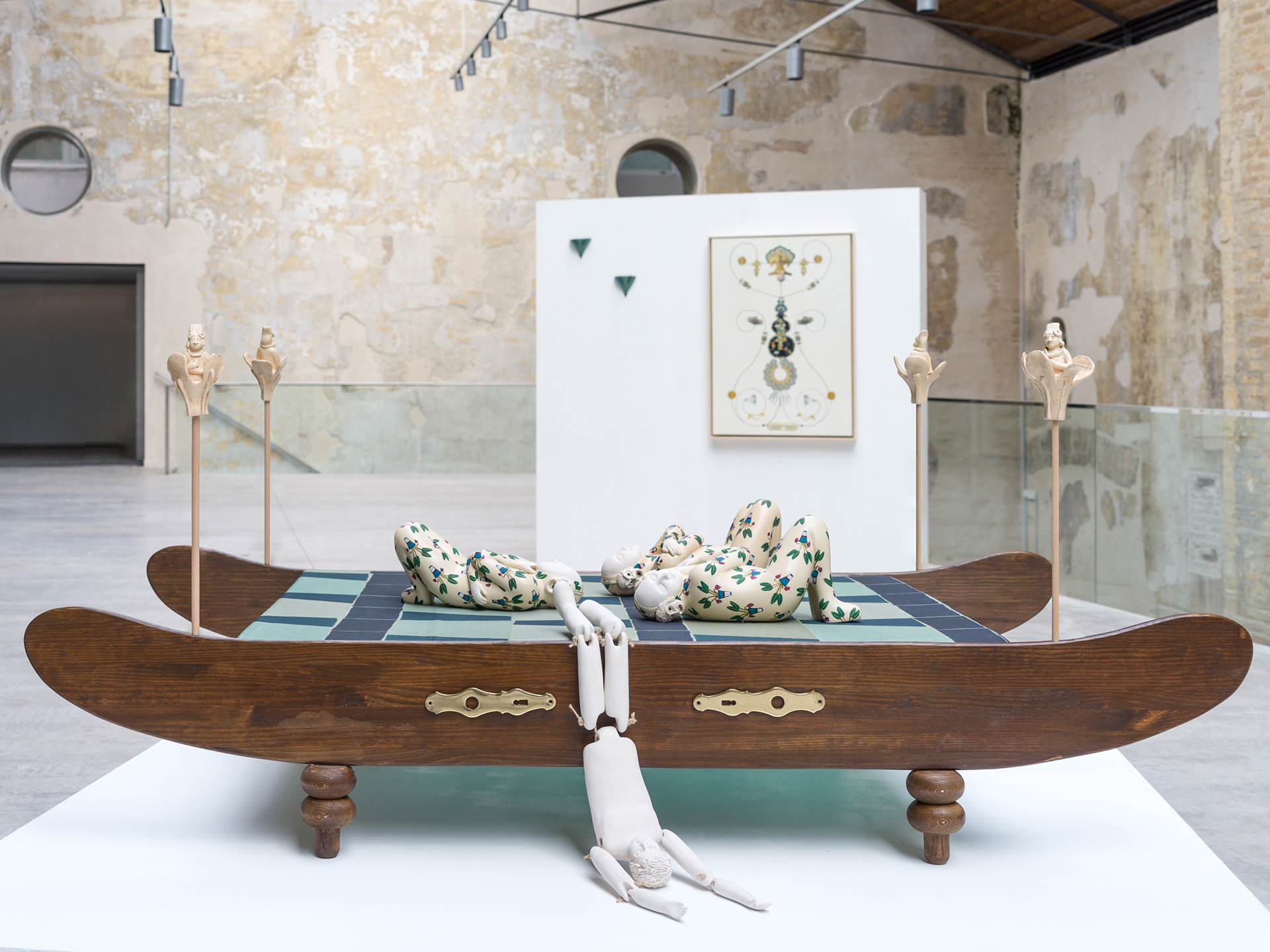
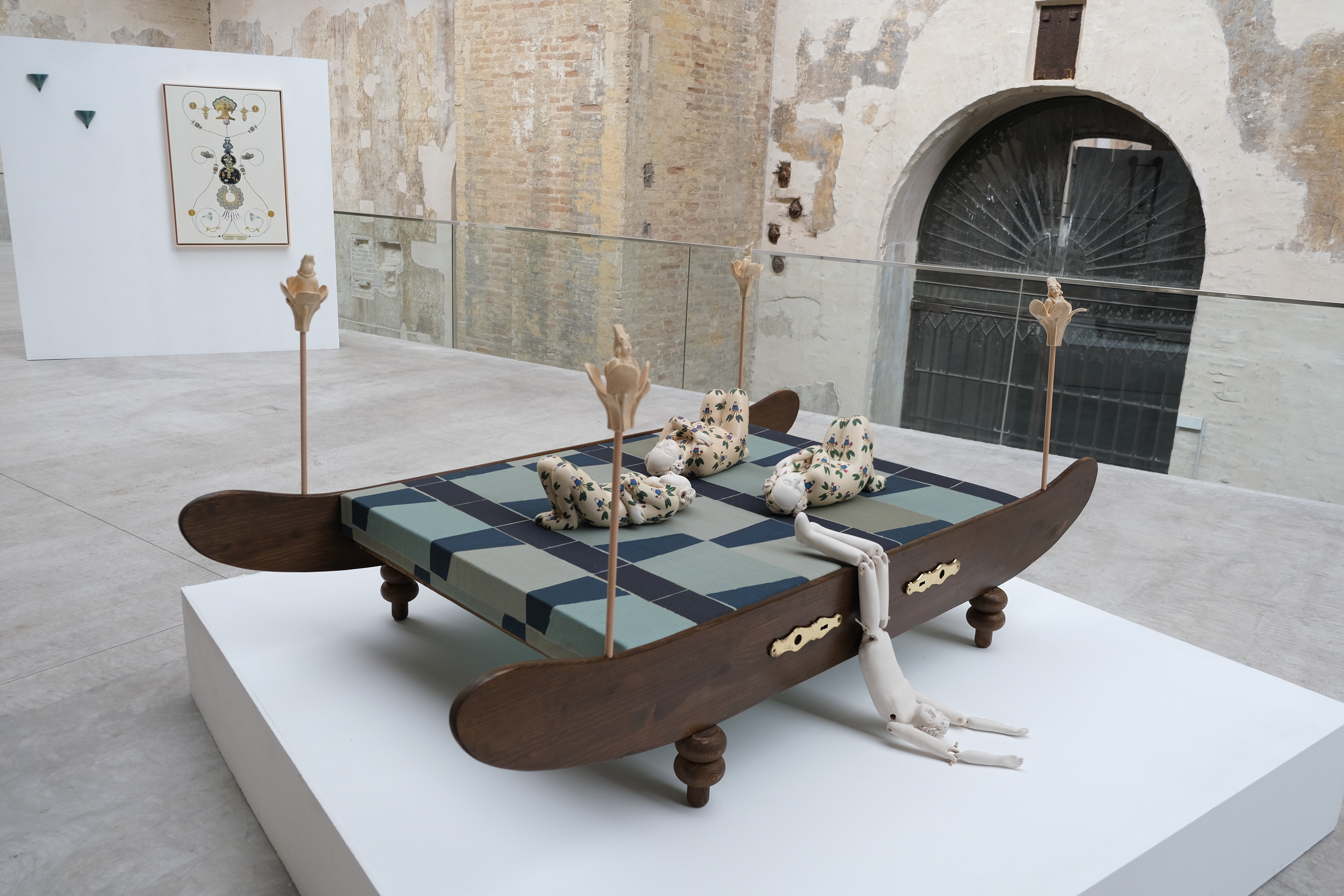
He Created the Flowers to Have Worshippers, 2026. Ceramic, wood, textile and brass. 200 x 100 x 120 cm
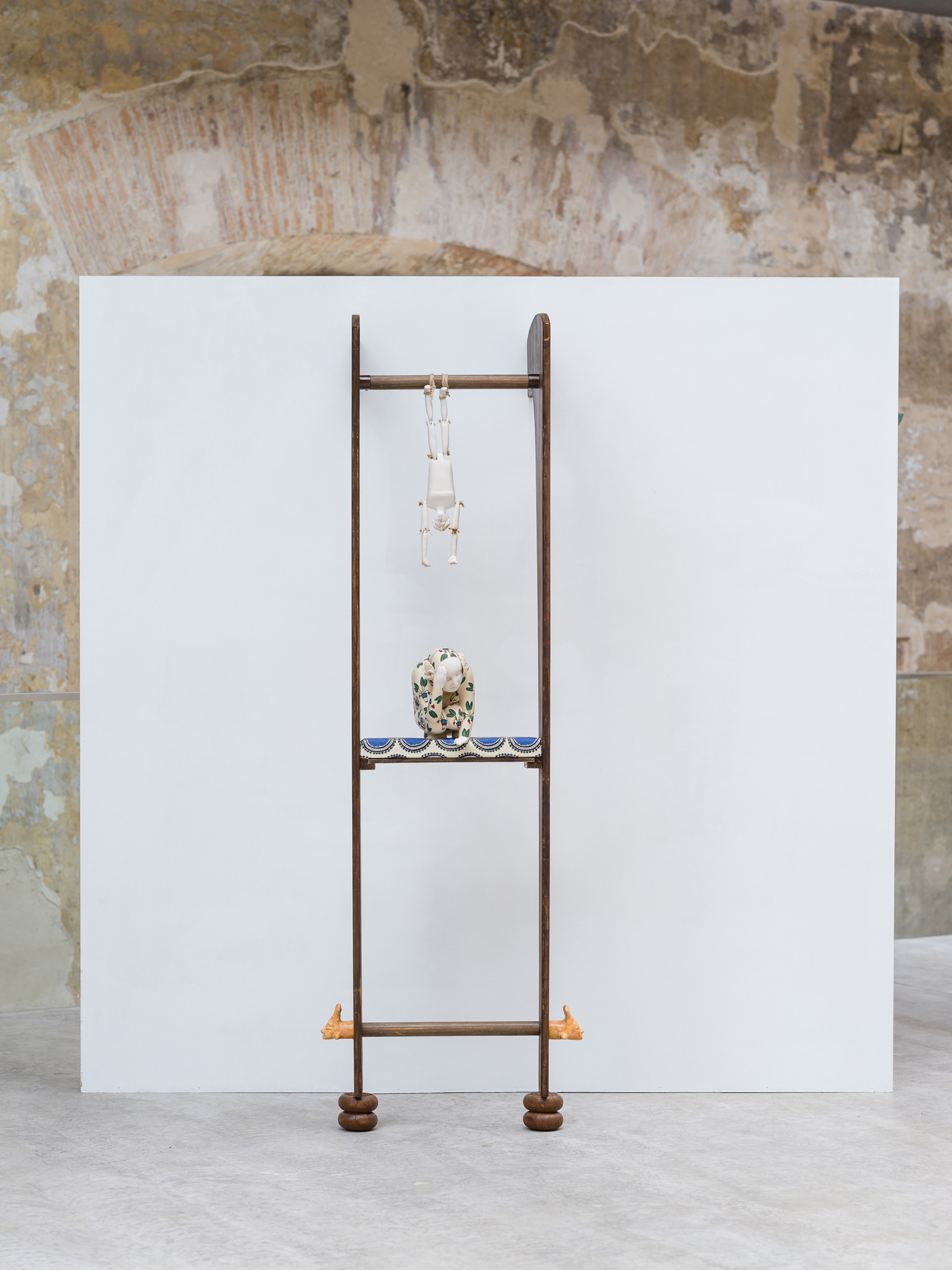
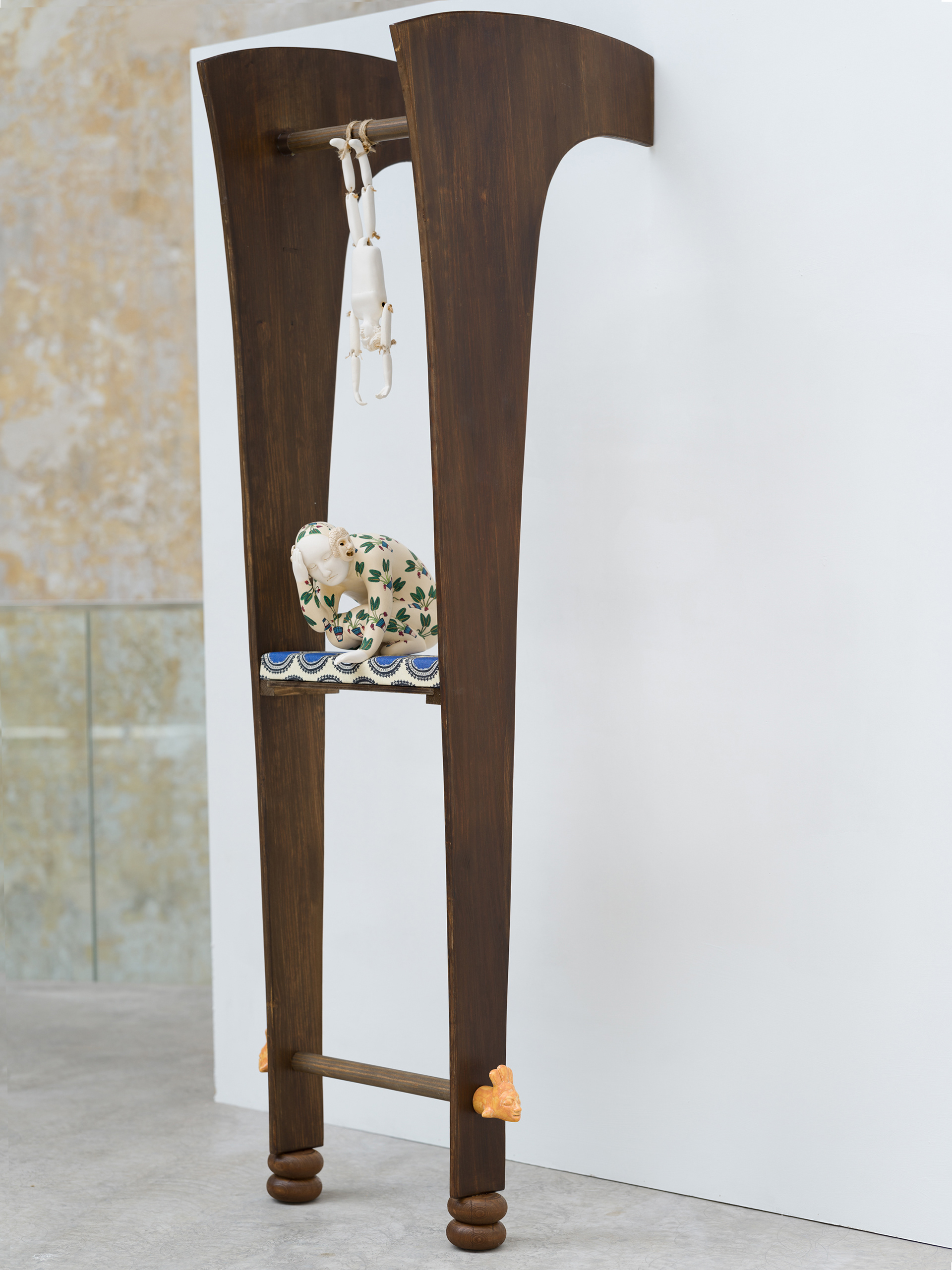
And the more I show, 2026. Ceramic, wood, textile and brass. 180 x 55 x 65 cm
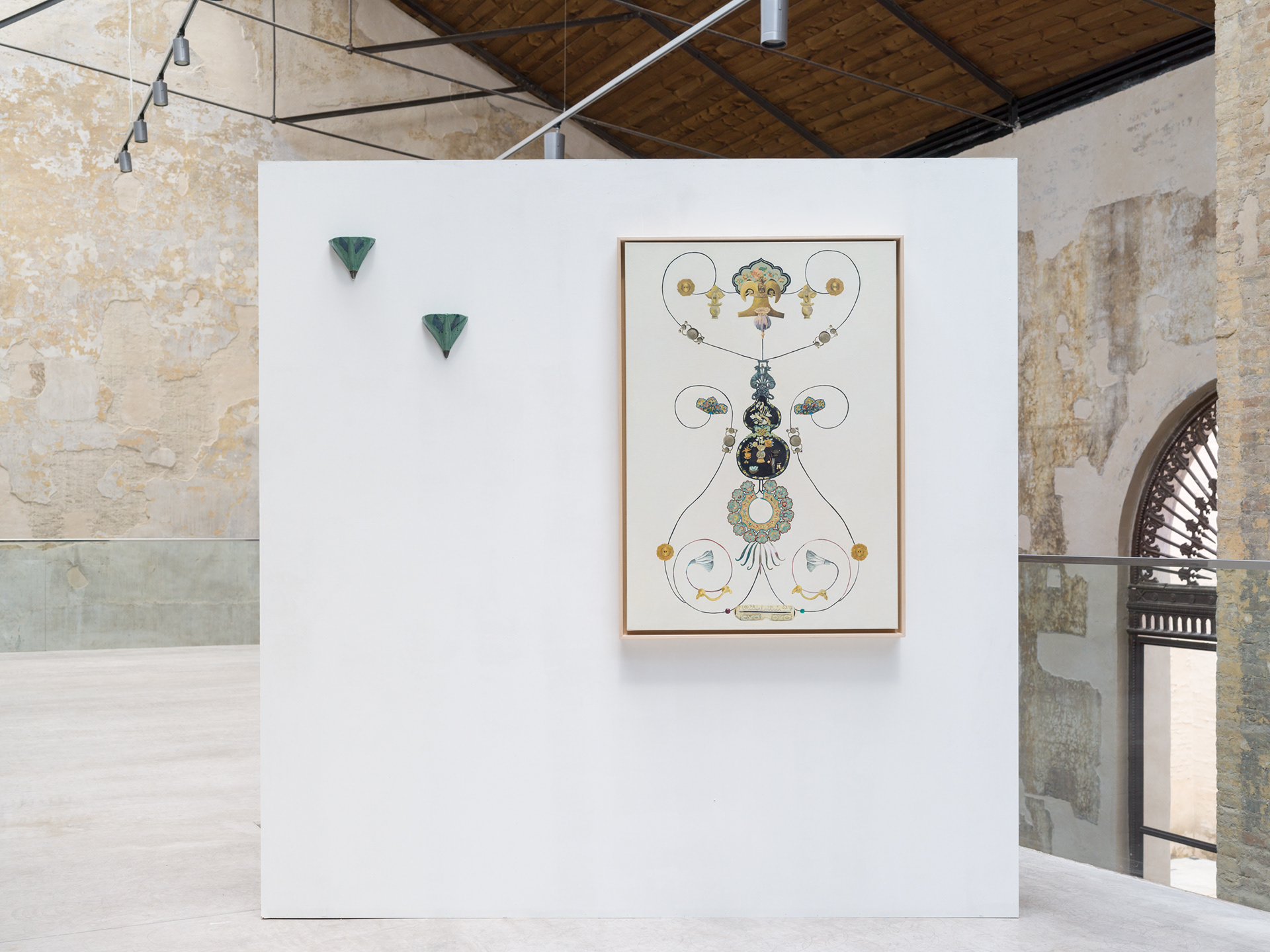
Hold the serpent, 2026. Oil on canvas, 100 x 70 cm